
Approaches to Pasture Re-seeding: Fast & Slow
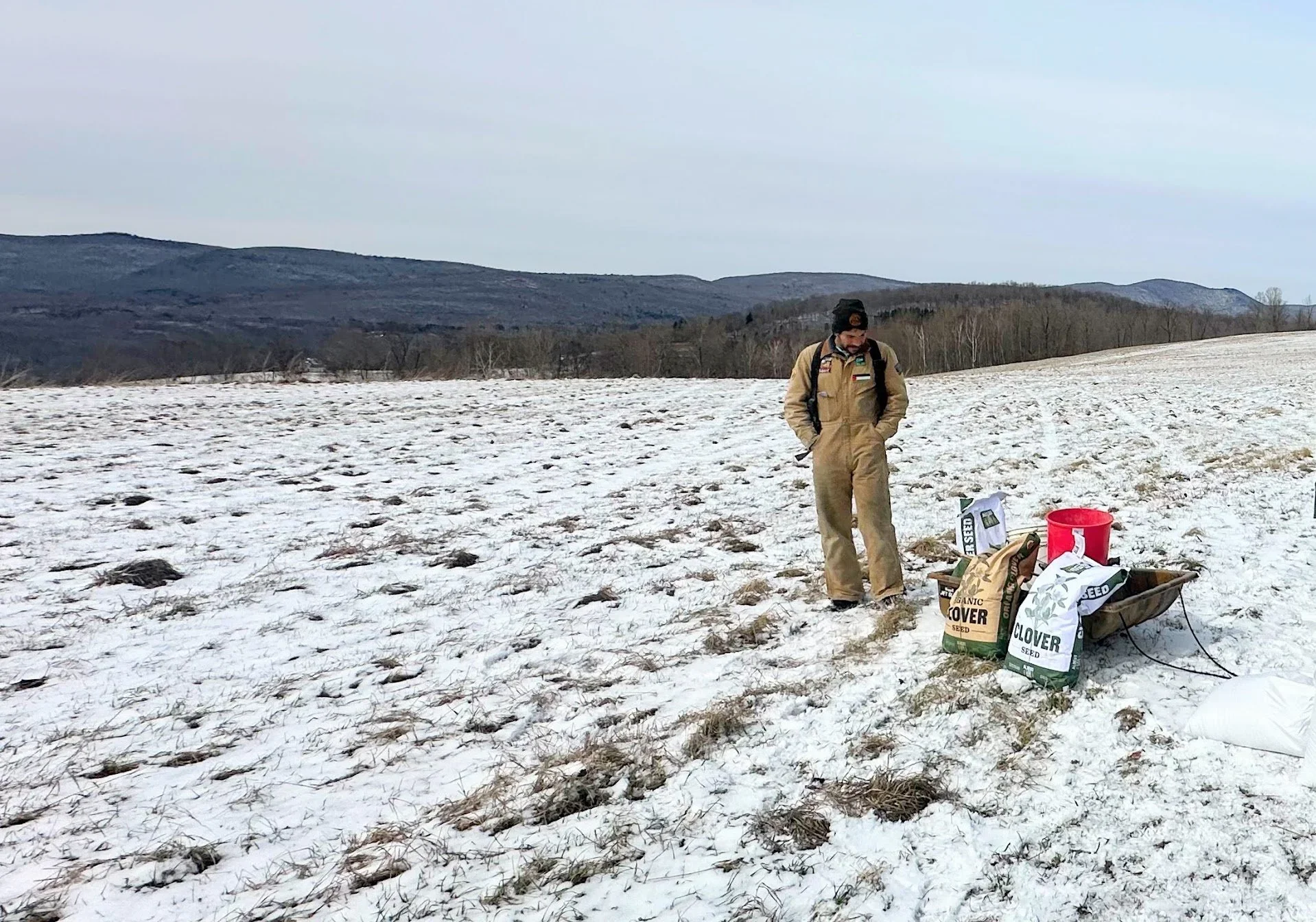
Last year, we acquired fields that had been managed in a conventional corn and hay rotation for many decades. One of our major goals with these fields is to broaden the number of plant species, which are largely dominated by a single type of grass. (We’re looking at you, Tall Fescue.) A diversity of desirable plants offer better nutrition for the sheep, greater resilience to climate variability, and added support for pollinators and wildlife.
Given the severe level of compaction and depletion in these fields, we had two choices. A hard reset, which would involve tilling, aerating, and reseeding from scratch. Or, taking the slow road and integrating small, continuous changes and amendments over time.
We’ve decided to take the slow road, and experiment along the way.
Frost Seeding: Frost seeding takes advantage of the ground’s natural thawing and refreezing cycles throughout the spring. While the soil flexes and cracks with the changing temperature, seeds that have been spread over the surface wend their way into fresh openings in the ground and settle in to germinate. In early spring, our soil specialist, Nour (pictured above), tramped across acres and acres of snowy fields and frost seeded a mix of clover, plantain and chicory, all from a hand-crank broadcaster. We’ve already seen good early growth from the clover and plantain, and are eager to see how they fare as the summer wears on.
Trample Seeding: Another approach to overseeding is to couple the seed spreading along with grazing action. When the sheep returned to the fields in early spring, we broadcasted our same seed mix into paddock areas and let the sheep’s trampling action incorporate the seeds into the soil and let their manure act as fertilizer. In a natural ecosystem, massive herds of grazers would enact this cycle on their own, in effect reseeding, fertilizing, and strengthening their food source as the moved through the landscape. We’re doing our best to mimic nature’s well-worn rhythm with some very eager sheep as our helpers.
We’ll be comparing the effectiveness of both of these approaches to pasture reseeding as we watch these fields respond to slow changes, one season, one seed and one hoof print at a time.