
Integrating Virtual Fencing: Our First Trial
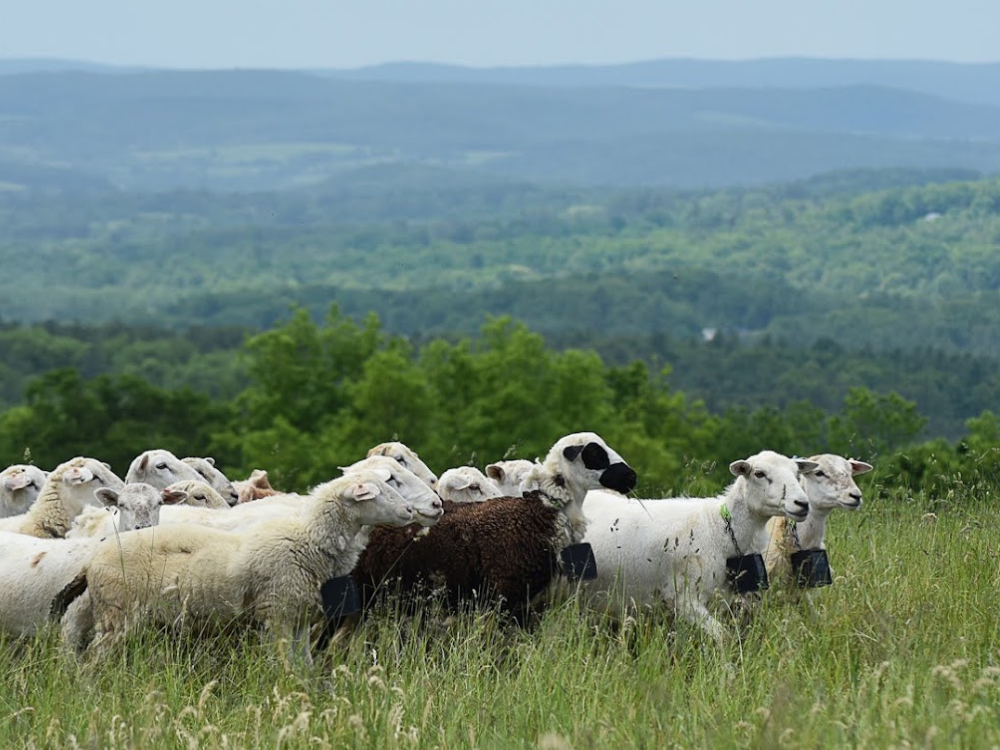
We’ve seen the environmental impact of holistic managed grazing firsthand. All across the world, and on hillside farms here in Vermont, ruminant grazers have shown they can stabilize soils, increase drought resilience, and rehabilitate land as they munch, bunch, and move.
The combination of optimal bunching (stocking density), with frequent moves to avoid overgrazing, is key to making a regenerative impact to the ecosystem. But in use, this mob-grazing style of daily moves is highly labor intensive, which limits adoption of proven practices, and raises the embedded production costs for farmers who do implement them.
Over the last few years, we’ve been watching as innovations with virtual fencing technology have allowed mobile grazing operations to become more nimble and efficient with their pasture management. Within these systems, grazing animals wear GPS collars which connect via satellite to virtual pasture boundaries, which are monitored and updated by farmers right on their phones. The animals sense the virtual boundary and will stay in a defined area within a larger open space.
This June we began our first trial with virtual fencing using GPS collars from NoFence. We used a test group of about 50 sheep and were surprised by how quickly they caught on to the collar training. (Though there were two individuals—you know who you are—who were slower learners and caused frequent alert pings on our phones. Mischief managed.) This technology allows us to create customized paddock shapes and respond to dynamic field conditions. For instance, in the month of April when the grass is thin, we’re often moving the flock and rebuilding new mobile paddocks twice a day. This system allows us to virtually draw a fresh paddock and make that move in a small fraction of the time.
Virtual fencing has the potential to help farmers and ranchers make grazing decisions based on ecological health rather than the limits of physical fencing or human labor. The challenge for us as livestock managers will be to keep animals safe within the virtual fencing system. Whether it’s with livestock guardian animals, permanent exterior fencing, or a collection of approaches, we need to balance efficient pasture moves with dependable protection from predators.
More to come!