
Texel-Katahdin Cross Breeding Trial
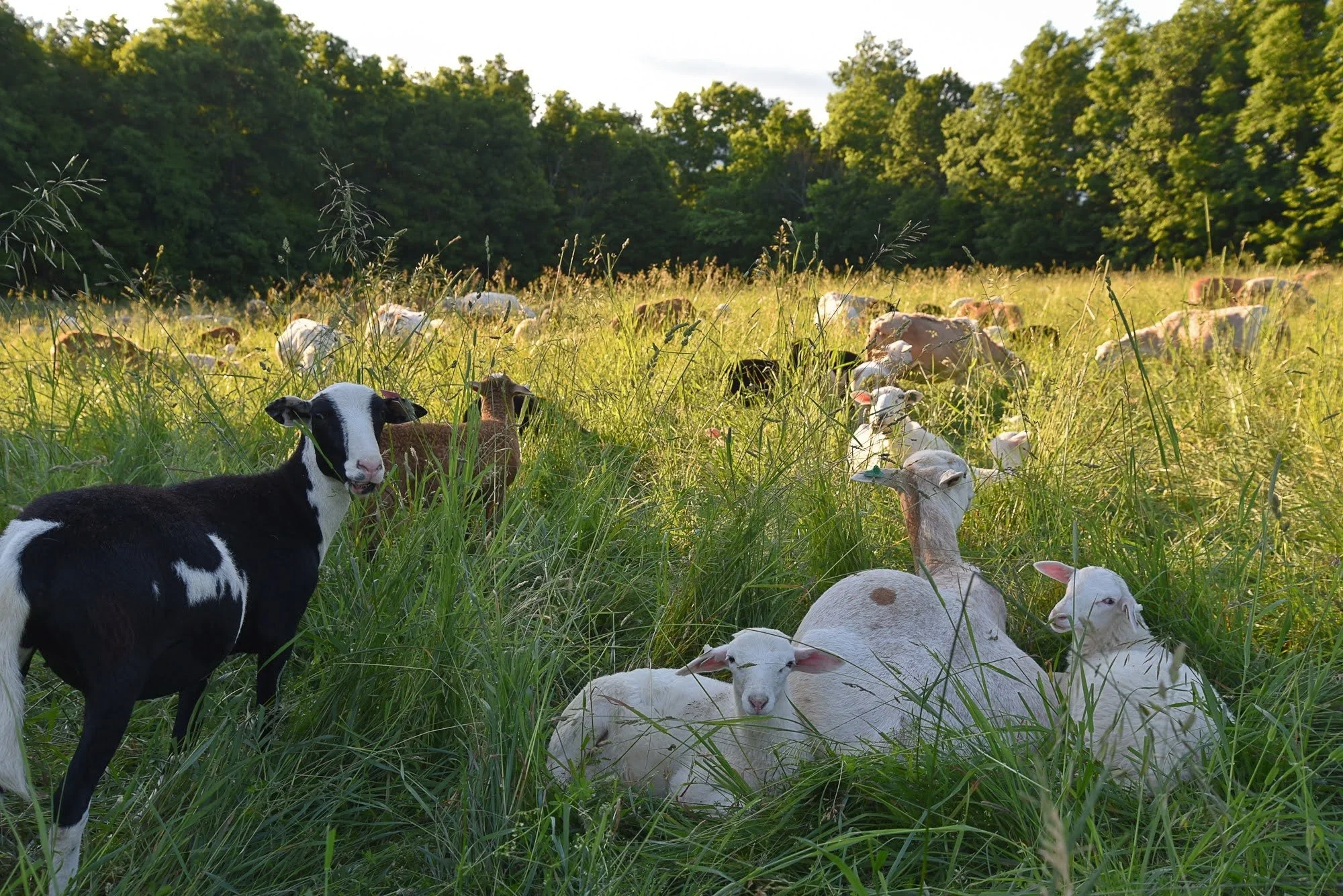
Our flock began in 2015, with a rag-tag group of 43 sheep, and one intrepid miniature guard donkey. There were mostly Katahdin sheep in that original group, with several Dorpers in the mix as well. Once our head shepherd, Miranda, joined our team, we started getting more selective and strategic with our breeding program. Over many years, and lots of dedicated recordkeeping by Miranda, we developed a pure Katahdin flock that thrives on an all grass diet, has strong mothering ability and independent lambing, great confirmation and feet (it matters when you’re a sheep), and excellent parasite resistance. We are proud members of the National Sheep Improvement Program (NSIP).
Katahdin sheep have a slew of desirable traits that make them ideal for our managed grazing operation. They’re physically hardy and resilient in a wide range of settings and weather conditions (like the time we got a foot of snow while lambing in May of 2020), they naturally shed their winter coat and don’t have to be sheared, and their meat is known for its mild, inviting flavor. Their sizes can vary, but our local meat customers who buy directly from us don’t mind a little natural variability.
Simultaneously, we’ve heard from restaurant partners, retail sellers, and aggregators over the years that their businesses are built on product size and consistency. Katahdins are medium sized sheep, and we are committed to an all-grass diet without supplemental corn or finishers to enhance weight gain. While a portion of our animals reach the range these buyers are looking for, we want to raise more lambs that can serve those markets.
Last year, we began thinking about how we could keep the traits we love about Katahdins, but also increase our lamb weights, without sacrificing our grazing principals. John from our team dove into research on Texel sheep, which are known for their generous size and stature. We had a farm huddle and agreed to try an experiment with our 2026 lambs and breed a trial group of Katahdin-Texel crosses. Our first Texel ram arrived on the farm last summer, and joined the breeding group last fall.
This spring, we met the first of the Texel cross lambs and boy are we pleased. Even with 50% Katahdin genes, these lambs show a significant growth advantage and they’re thriving within our field management system. The first lamb of the season was a Texel cross, and he recently weighed in at 88 pounds before reaching 4 months old. (For comparison, we’d be happy to have a grass-fed Katahdin lamb reach that weight by 7 months old.) That 88 pound lamb is way out in front on the growth leader board, but the trend tracks similarly with the rest of his cohort.
We’ll have more comprehensive data to share in September, once we’ve measured lamb weights at weaning time, but we are thrilled with the early results of this breeding trial!